


A well-planned garden path design can completely transform your outdoor space. Beyond simply getting you from A to B, the right path guides you through your garden, highlighting its best features and tying together different areas with a sense of purpose and style.
For many homeowners, paths are a practical necessity, preventing muddy footprints on the lawn, improving access in all weathers, and making the garden more usable. But with thoughtful design and skilled garden path builders, your path can also become a striking design feature in its own right.
Whether you’re planning a new route through a landscaped garden or upgrading an existing walkway, here are six design ideas that strike the perfect balance between style and functionality.
1. Stepping Stones on Gravel
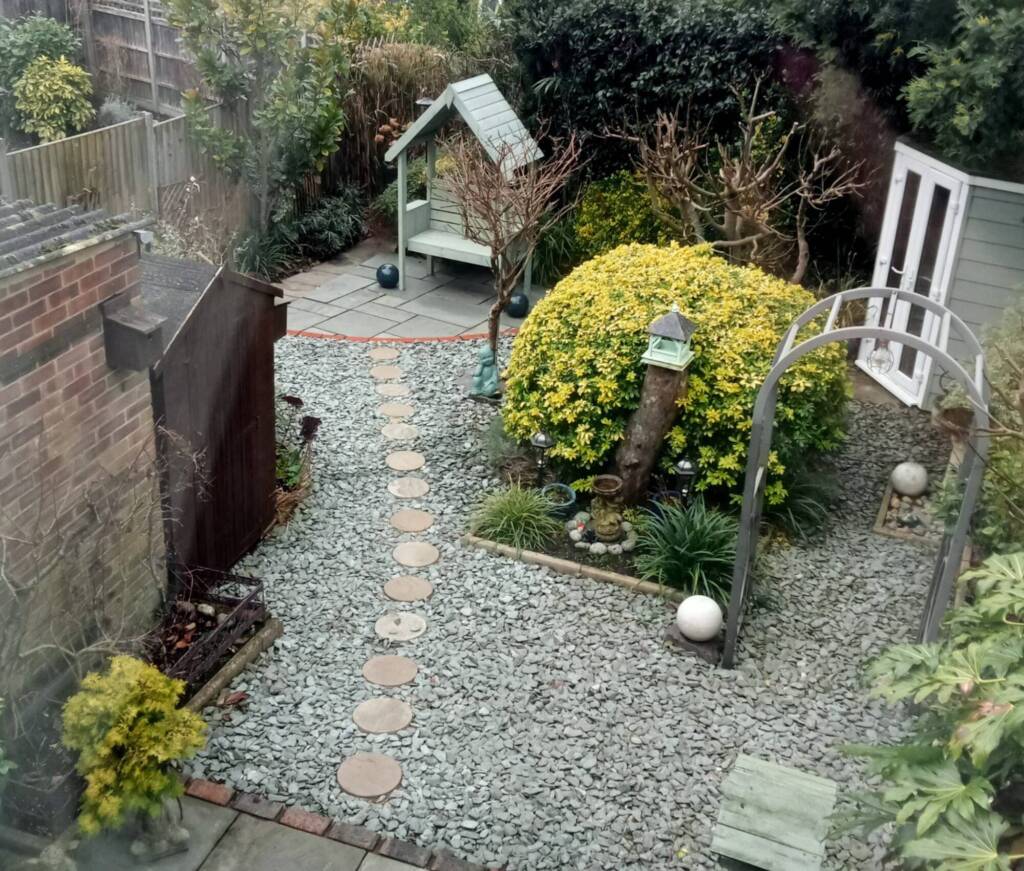
Stepping stones set into gravel is a timeless look that works beautifully in both traditional and contemporary gardens. Large natural stone slabs offer firm footing, while the gravel around them creates texture, aids drainage, and softens the overall look.
This garden path design is especially useful where you want a path that blends into planting areas without dominating the scene. The gravel also helps to suppress weeds and prevents puddles forming on the walking surface, ideal for wetter parts of the UK.
According to Gardeners’ World, gravel paths remain one of the most cost-effective and versatile surfaces for garden pathways, especially when combined with robust stepping stones.
2. Curved Pathways for Flow and Discovery
Straight paths have their place, especially in formal gardens, but gentle curves can add a sense of movement and intrigue. A winding path invites exploration, leading the eye to focal points such as a seating area, water feature, or ornamental tree.
Curved routes can also make smaller gardens feel larger, as the destination is partially hidden until you arrive. When combined with lush planting along the edges, the effect is both functional and immersive.
3. Mixing Materials for Character
Combining two or more materials in your garden path design can add visual interest and enhance functionality. For example, set concrete slabs within a brick border, or alternate stone pavers with gravel strips.
This approach allows you to enjoy the benefits of different materials, such as the stability of slabs and the drainage of gravel, while adding detail that makes the path feel unique. Material mixing also works well for defining boundaries, helping your path stand out without overwhelming the surrounding garden.
4. Zoning the Garden with Path Layout
Paths aren’t just about getting from one point to another, they can also define your garden’s layout. Strategic placement of walkways can create distinct “rooms” within your garden, guiding visitors from one space to the next.
For example, a main path could lead from the patio to a central lawn, with smaller offshoots connecting to a shed, greenhouse, or seating area. This zoning effect helps organise your garden both visually and practically, making it easier to maintain and enjoy.
5. Stepping Stones Set in Lawn
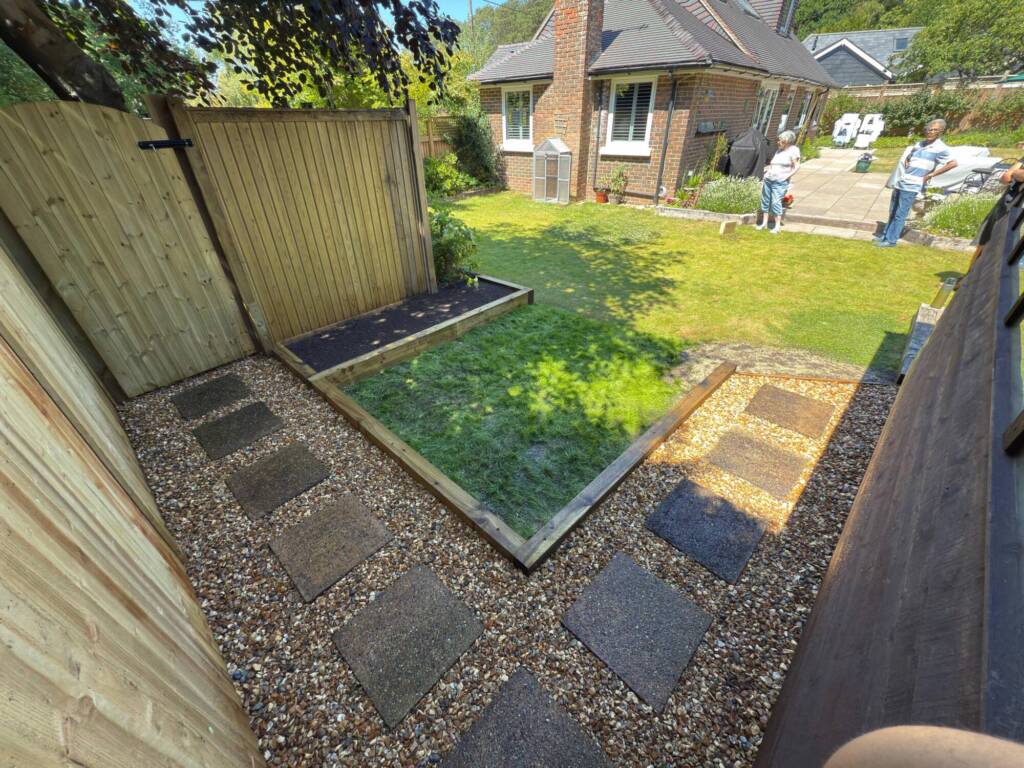
Integrating stepping stones directly into the lawn is a simple way to create a functional path without interrupting the greenery. The stones should be laid flush with the grass surface to allow easy mowing, while still providing a stable, dry walking surface.
This is a great solution for informal gardens or where you want to keep the path’s impact minimal. It works especially well for routes between frequently used points, such as from the back door to a washing line or shed.
6. Low-Maintenance Gravel or Mulch
If you’re looking for an affordable and easy-to-install option, gravel and mulch paths are hard to beat. Gravel offers durability, permeability, and a choice of colours, while mulch brings a natural, earthy feel that suits informal planting schemes.
Gravel paths may need occasional top-ups to maintain their appearance, while mulch should be replenished once or twice a year. Both materials are permeable, making them an eco-friendly choice for managing rainwater naturally.
Planning a Garden Path: Style Meets Function
While style is important, practical considerations should guide your final choice of design and materials. A path that looks beautiful but becomes slippery in winter or floods after heavy rain will quickly lose its appeal.
Here are some functional factors to consider during planning:
- Traffic level: Will the path see daily use, or is it purely decorative?
- Weather resistance: Will frost, rain, or heat affect the materials?
- Drainage: Can water drain away easily to prevent puddles and algae build-up?
- Slip resistance: Especially important in shaded or damp areas.
- Maintenance: Are you willing to re-sand joints, top up gravel, or reseal surfaces?
Skilled garden path builders will assess these factors on site and recommend solutions tailored to your garden’s conditions.
Garden Path Construction: Getting It Right First Time
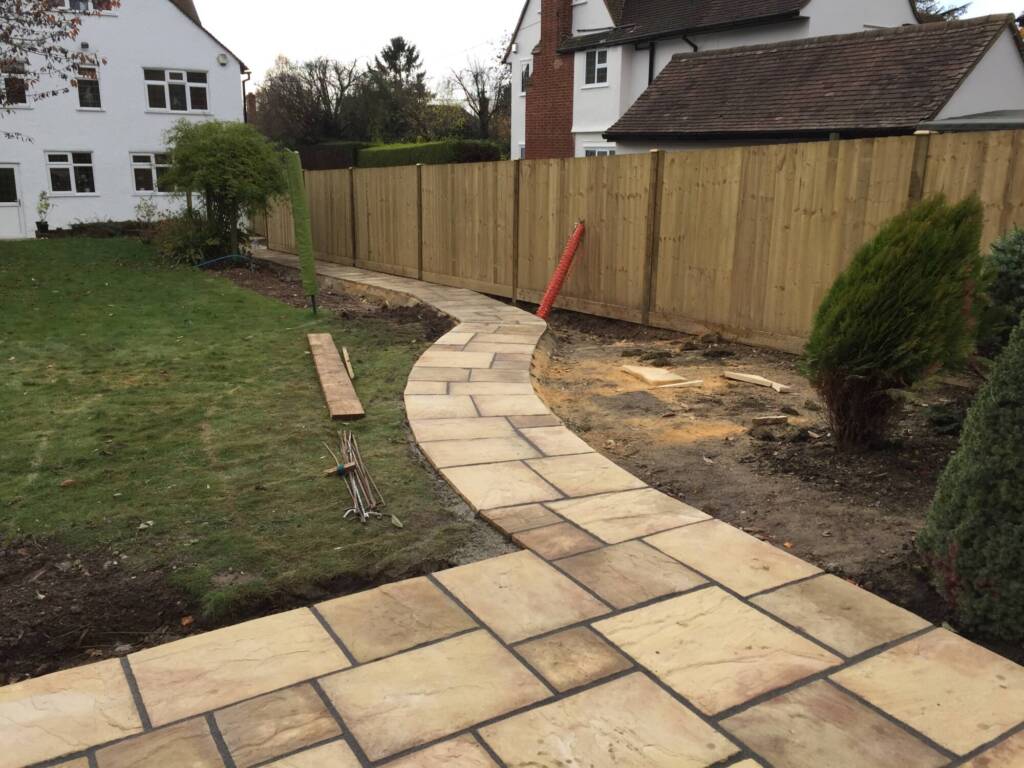
A path is only as good as its foundation. Proper garden path construction begins with excavating the surface to the desired depth. Once excavated, lay a geotextile woven membrane to prevent stones from migrating into the subsoil.
Next, install a sub-base of MOT Type 1 or recycled concrete, compacting it in layers of around 100 mm until the required level is achieved.
From here, the finishing surface depends on the chosen material:
- Slabs should be laid on a full bed of sand and cement, with each slab primed before being set in place.
- Gravel should be installed on an interlocking plastic grid to prevent shifting and stop the sub-base from being exposed.
- Timber needs to be securely pinned down and locked in place to avoid movement on the sub-base.
Whichever surface is chosen, it must be laid to the correct falls so that water runs off or drains through effectively. Edging may also be required to hold the materials in place and maintain the path’s shape.
Professional installation ensures not only durability but also compliance with any local guidelines, especially where paths meet driveways or public walkways.
Looking for garden path builders in Surrey?
A garden path is more than just a walkway, it’s an opportunity to enhance your outdoor space, connect different areas, and showcase your personal style. From stepping stone trails to curved brick pathways, the right garden path design blends beauty with function.
Whether you want a rustic trail, a formal route, or something entirely unique, we can bring your vision to life. Our team handles every stage of the process, from initial site survey and design to full garden path construction, including drainage, edging, and finishing.
Discover more about creating your new garden pathway, or contact us today for your free, no-pressure quote.
Garden Path Design & Construction FAQs
How long does a garden path last?
The lifespan depends on the materials used and how well the path is installed. Natural stone and concrete pavers can last decades with minimal upkeep, while gravel and mulch may need topping up every few years.
Which materials are best for a garden path?
Popular options include natural stone for a timeless look, brick for character, gravel for permeability, and concrete pavers for durability. The right choice will depend on your garden path design, budget, and maintenance preferences.
Do I need planning permission for a garden path?
Most garden paths don’t require planning permission in the UK. However, exceptions can apply in conservation areas, listed properties, or if significant changes to ground levels are planned.
What’s the best surface for an all-weather path?
Slip-resistant materials such as textured stone or resin-bound gravel work well in wet or frosty conditions. Good drainage is equally important to prevent puddling and algae growth.
What’s the typical timeframe for garden path construction?
Small paths can be completed in a couple of days, while more complex designs with curves, edging, and multiple materials may take up to a week or more.
How can I make my garden path low-maintenance?
Choose durable materials, install proper edging to prevent spreading, and ensure good drainage. Sealing pavers and topping up gravel as needed will also keep the path looking its best.
