


Decking is a premier way to transform your Surrey garden into a functional space for entertaining and relaxation. However, choosing the right material is vital to ensure your investment withstands the UK’s unpredictable climate.
At Evolve Construction, we specialise in bespoke, long-lasting hardscaping. The most frequent question we hear regarding decking is: composite or timber? While both offer unique benefits, the right choice depends on your aesthetic goals, budget, and desired level of maintenance.
Understanding the Basics: Composite vs Timber
When planning your decking project, choosing the right material is the first step toward a successful outdoor transformation. Here is how the two primary options compare.
Composite Decking
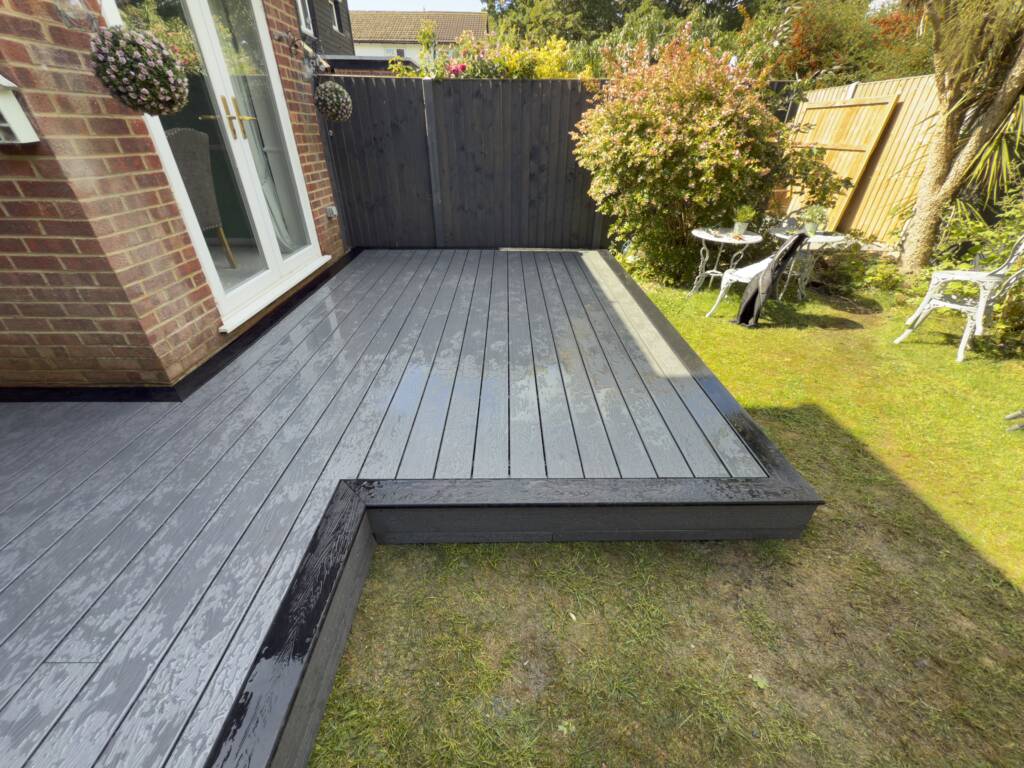
Composite decking is an engineered product designed for longevity and ease of use. It ranges from entry-level utility boards to premium, high-fidelity timber replicas.
- Entry-Level: Typically made from recycled plastics and binding agents. These are lightweight, weather-resistant, and highly cost-effective.
- Premium Grade: A sophisticated blend of recycled wood fibres and polymers with a protective outer “cap.” These offer deep wood-grain textures, concealed fixings, and superior UV resistance.
- Key Benefits: Virtually immune to rot, splintering, and insect damage. It requires no staining or painting, making it ideal for the variable Surrey climate.
Natural Timber
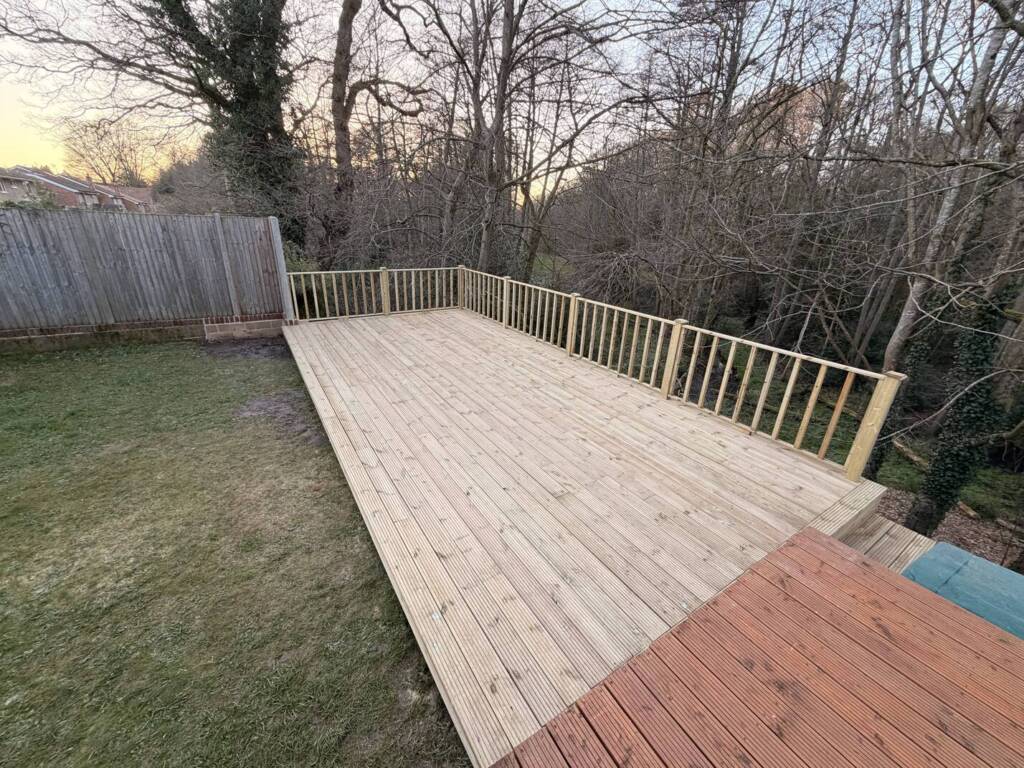
Timber remains the gold standard for homeowners seeking an organic, traditional aesthetic.
- Softwoods: Options like Pine offer a classic look at an accessible price point.
- Hardwoods: Premium species such as Oak or Iroko provide incredible density, rich colours, and a distinct character that evolves as the wood ages.
- Maintenance: To prevent algae growth, splitting, or fading, timber requires regular oiling or sealing.
| Feature | Composite Decking | Natural Timber |
| Maintenance | Minimal (Soap & water wash) | High (Annual oiling/staining) |
| Durability | High (Rot & insect proof) | Variable (Subject to weathering) |
| Aesthetics | Modern & consistent | Traditional & unique grain |
| Lifespan | 25+ years (often warrantied) | 10–25 years (species dependent) |
| Feel | Stays splinter-free | Can splinter over time |
| Cost | Higher initial investment | Lower initial (Softwood) to High (Hardwood) |
Appearance and Style
The visual impact of your decking plays a significant role in how your garden feels as a whole. Some homeowners are drawn to the authenticity of natural wood, while others prefer the more contemporary finish of composite decking.
Timber brings warmth and texture that blends seamlessly into traditional or cottage style gardens. Its ability to weather naturally can enhance that charm over time, although this does depend on how it is maintained. For those who enjoy a slightly rustic or evolving aesthetic, this can be part of the appeal.
Composite materials, by contrast, offer a cleaner and more consistent appearance. Available in a wide range of tones, from soft greys to rich browns and stark black, they are well suited to modern landscaping schemes. Because the colour and finish are manufactured into the board, the overall look remains uniform across the entire deck.
When creating bespoke decking, either material can be tailored to suit the layout and style of the garden. The choice often comes down to whether you prefer natural variation or a more uniform finish.
Lifespan and Long Term Value
One of the biggest differences between the two materials is longevity. Composite decking typically lasts between 20 and 30 years, depending on the quality of the product and installation. Its resistance to rot, insects, and moisture means it maintains its structural integrity over time with very little intervention.
Timber decking generally has a shorter lifespan. Softwood decking may last around 10 to 15 years, while hardwood options can extend beyond 20 years if properly maintained. However, this lifespan depends heavily on regular treatment and care.
From a long term perspective, composite is often seen as a more cost effective solution despite higher upfront costs. Timber can be more affordable initially, but ongoing maintenance and potential replacement can increase the overall investment.
Maintenance and Upkeep
How much time you want to spend maintaining your deck can be just as important as how it looks on day one.
Composite is widely recognised as an excellent choice for low maintenance decking in the UK. Routine cleaning is usually limited to occasional washing to remove dirt and debris. There is no need for staining or sealing, which makes it especially appealing for busy households or those who simply want to enjoy their garden without added chores.
Timber requires a more hands-on approach. Regular cleaning, sanding, and treatment with oils or stains are essential to protect it from moisture and UV damage. Without this upkeep, the surface can become discoloured and more vulnerable to wear.
For some, this maintenance is part of the appeal of working with a natural material. For others, it quickly becomes a deciding factor in favour of composite decking.
Weather Resistance in Surrey’s Climate
The British weather presents a unique challenge for outdoor materials, with frequent rain, fluctuating temperatures, and occasional periods of intense sunlight.
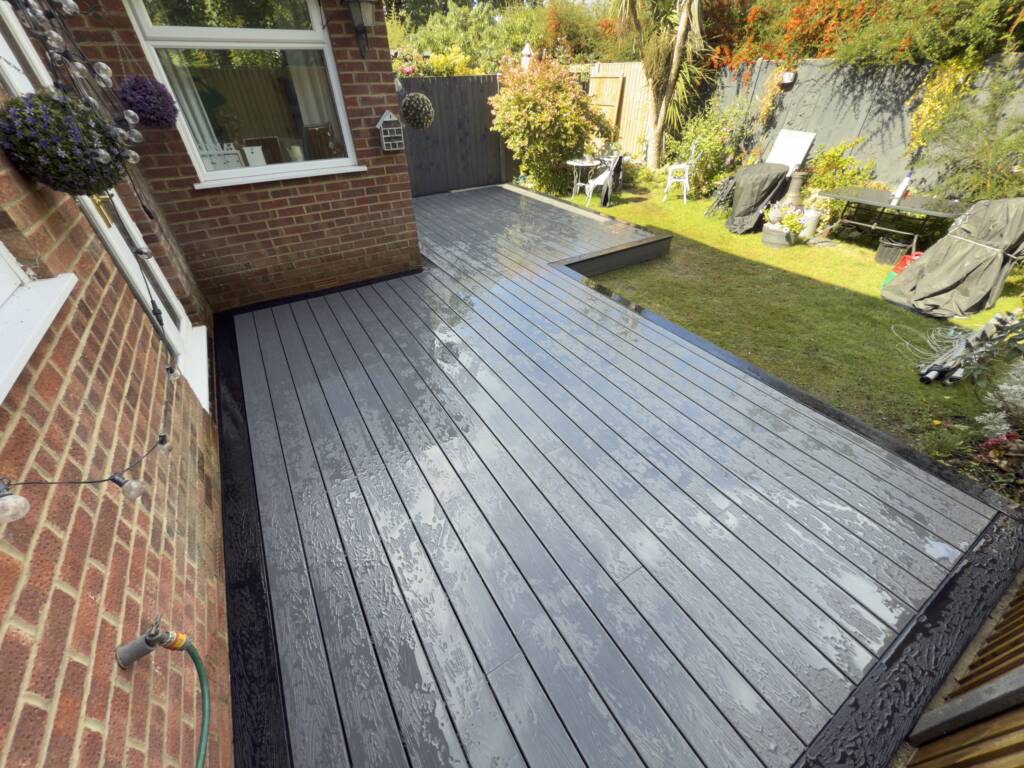
In Surrey and the surrounding area, composite decking performs consistently well despite often damp conditions. Its resistance to moisture helps prevent rot and mould, while its stable structure minimises expansion and contraction. This reliability makes it a strong contender for gardens that see heavy use throughout the year.
Timber can still perform well, but it requires more protection. Prolonged exposure to moisture can lead to swelling or decay, particularly if the protective finish begins to wear away. Sunlight can also cause fading, altering the appearance over time unless the surface is regularly treated.
That said, with proper maintenance and high quality materials, timber material can still perform well. The key is ongoing care and professional decking installation.
Installation and Practical Considerations
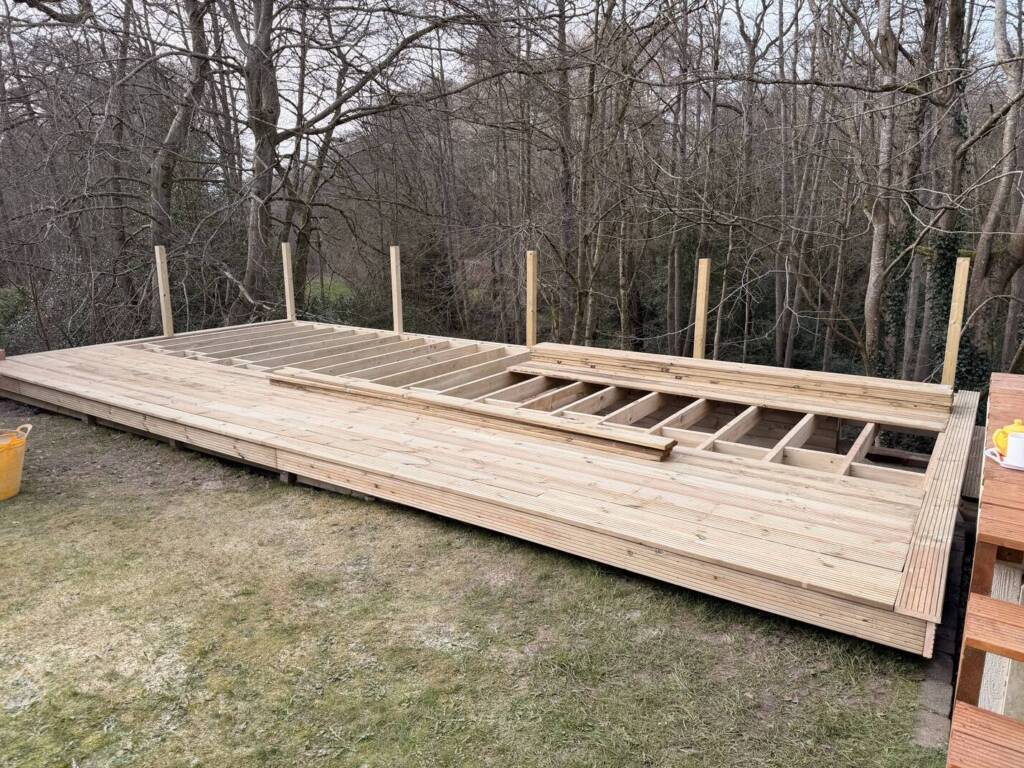
Decking installation involves far more than simply laying boards. Ground preparation, drainage, and structural support are all essential to achieving a durable, high quality finish. At Evolve Construction, we carefully assess the unique characteristics of each garden during the planning stage.
Factors such as sloped or uneven terrain, soil conditions, and drainage needs all influence the installation approach. With the right groundwork in place, both composite and timber decking can be installed effectively, even in more challenging spaces. Subframes and support systems provide the stability needed for long term performance regardless of the material chosen.
Composite boards are typically installed using hidden fixing systems, creating a clean, streamlined look while allowing for natural expansion and contraction. Timber decking is usually secured with screws or nails, offering a more traditional appearance and greater flexibility for irregular layouts.
Installation time can vary depending on the complexity of the design, but most bespoke decking is completed within one to three weeks. Professional installation ensures your deck is safe, long lasting, and suited to the demands of the UK climate.
Sustainability and Environmental Impact
For many homeowners, environmental impact is becoming an increasingly important part of the decision making process.
Composite decking often includes recycled materials, which helps reduce waste. Its long lifespan also means fewer replacements, contributing to a lower overall environmental footprint over time.
Timber can be a sustainable option for bespoke decking in Surrey when it is sourced responsibly. Certified wood from managed forests ensures that environmental standards are maintained. However, the need for ongoing treatments and the potential for shorter lifespan can influence its overall sustainability.
Choosing the right option often comes down to balancing these factors with your personal priorities and how long you intend to stay in your property.
Cost Comparison and Overall Value
Budget considerations go beyond the initial price of materials. It is important to think about the full lifecycle of your decking.
Timber decking is often more affordable at the outset, which can make it an attractive option for smaller projects or tighter budgets. However, the cost of maintenance products and potential repairs over time should not be overlooked.
Composite requires a higher initial investment, but its durability and minimal upkeep can make it more cost effective in the long run. For many homeowners, the reduced need for maintenance and longer lifespan provide better overall value.
When planning bespoke decking in Surrey, we always help clients weigh these factors carefully to ensure the final choice aligns with both their budget and expectations.
Composite vs. Timber Decking in Surrey: Making the Right Choice for Your Garden
There is no one size fits all answer when it comes to the best material for your garden’s decking. The right choice depends on your lifestyle, design preferences, and how much time you want to spend maintaining your outdoor space.
If you value a natural look and are happy to invest in regular care, timber decking can be a beautiful addition to your Surrey garden. If you prefer durability, consistency, and low maintenance decking, composite decking may be the better option.
However, with the right guidance and expert installation, either option can create a beautiful and functional outdoor space. At Evolve Construction, are here to help you make that choice with confidence, ultimately delivering bespoke decking in Surrey that meets your practical needs and aesthetic goals.
Our extensive experience in both hardscaping and groundworks ensures that every deck is built on a solid foundation, providing lasting results that truly enhance your Surrey home.
If you are considering decking installation in Surrey and would like expert guidance tailored to your garden, get in touch with our team today to start planning a space that works for you all year round.
FAQs – Bespoke Decking in Surrey
Q: How long does composite decking typically last compared to timber?
A: Composite decking can last 20 to 30 years or more with minimal maintenance. Timber decking usually lasts between 10 and 20 years depending on the type of wood and level of upkeep.
Q: Is composite decking slippery when wet?
A: High quality composite decking should be designed with slip resistant surfaces, making it suitable for the UK climate. While no surface is completely slip proof, composite generally performs well in wet conditions.
Q: Can timber and composite decking be installed on uneven garden terrain?
A: Yes, timber and composite decking can be installed on uneven ground with proper groundwork and structural support. Professional installation ensures stability and durability.
Q: Does composite decking fade over time in direct sunlight?
A: Modern composite decking is designed to resist fading. Some slight colour change may occur over time, but it is usually minimal compared to untreated timber.
Q: What is the typical installation time for a bespoke decking project in Surrey?
A: The average decking installation in Surrey takes between one and three weeks to complete, depending on size, design complexity, and site conditions.