


Winter doesn’t have to halt your project; it just requires smarter planning. When temperatures drop in Surrey and the surrounding areas, everything from foundations and footings to retaining walls construction demands extra attention to detail.
In this guide, we’ll break down what homeowners, builders, and property developers need to know to keep projects moving safely and efficiently through the colder months. Whether you’re navigating foundations and drainage or foundations and footings, we’ll provide a winter-ready overview that will help you build strong, stable and stress-free.
Why Winter Groundworks Require Special Attention
The Challenges of Cold‑Weather Construction
When winter arrives, your groundwork project becomes more complex. Frozen or saturated soil can shrink, expand, or move, causing shifts beneath foundations or footings. In fact, heavy rain or frost during winter can worsen settlement beneath foundations and lead to structural movement.
Cold ground also affects concrete curing and strength gain. As noted by professional body Concrete Society, freshly poured concrete should not fall below 5 °C until it reaches a minimal strength mark.
Benefits of Planning Foundations Groundworks in Winter
Despite the extra challenges, winter can be a smart time to undertake groundworks. You may find there is lower contractor demand meaning more availability and faster scheduling, meaning you can get your foundations groundworks project booked in sooner.
With bookings being sooner, your project will be finished sooner. Starting early means your build is ready for spring and summer rather than delayed until later in the year.
Another benefit to planning foundations groundworks now is that with the right planning, you ensure your foundations and footings are solid before the next season’s loads and weather changes.
Understanding Foundations and Footings in Winter Conditions
What Are Foundations and Footings, And How Do They Work Together?
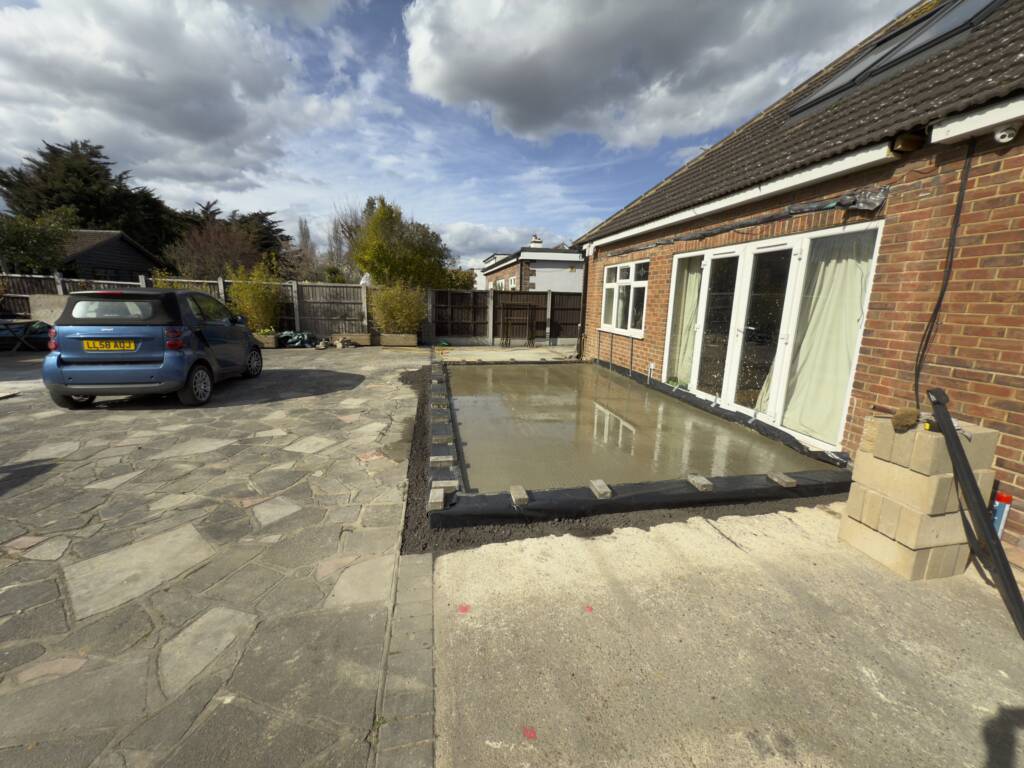
Underpinning a building is a system of foundations and footings. Footings spread the load of the structure over a wider area of soil, while foundations support vertical loads and keep the building stable. If either is compromised by improper winter groundworks, you risk future movement or cracking.
Getting the footing size, depth, and soil conditions right is especially important when working in the winter months.
Best Practices for Laying Foundations and Footings in Cold Weather
- Ensure the sub‑base and trench are free from frost or ice before concreting. Pouring onto frozen or heavily saturated ground can lead to poor curing and structural issues.
- Use concrete and mixes specified for winter work; place and cure so that the concrete remains above the required minimum temperature (≈ 5 °C) during its early strength development.
- Monitor weather forecasts and don’t start excavation too early if ground frost is present.
- Protect fresh concrete pours from freezing or rapid cooling by using insulation or thermal blankets.
Integrating Drainage with Foundations for Long‑Term Stability
Why Foundations and Drainage Must Be Planned Together
Even the best‑built foundation will fail if the surrounding water is poorly managed. In winter, water can collect, freeze and exert pressure or saturate soil and reduce its load‑bearing capacity. That’s why foundations and drainage must be integrated at the design stage – you’re not just digging and pouring; you’re managing water, frost‑heave risk and soil health.
How Drainage Supports Retaining Walls Construction, and Foundations
If your site involves slopes or elevated ground, water must be diverted away from both foundations and any retaining walls. Good practice includes: drainage channels, adequate fall, soak‑away or sub‑surface drainage, and linking that to your foundation trenches. When you select a contractor experienced in foundations groundworks, they’ll ensure drainage is a part of your foundation system, not an afterthought. For an experienced company, speak to our groundworks Farnham team.
Retaining Walls Construction for Winter Projects
Structural Considerations for Cold‑Season Wall Building
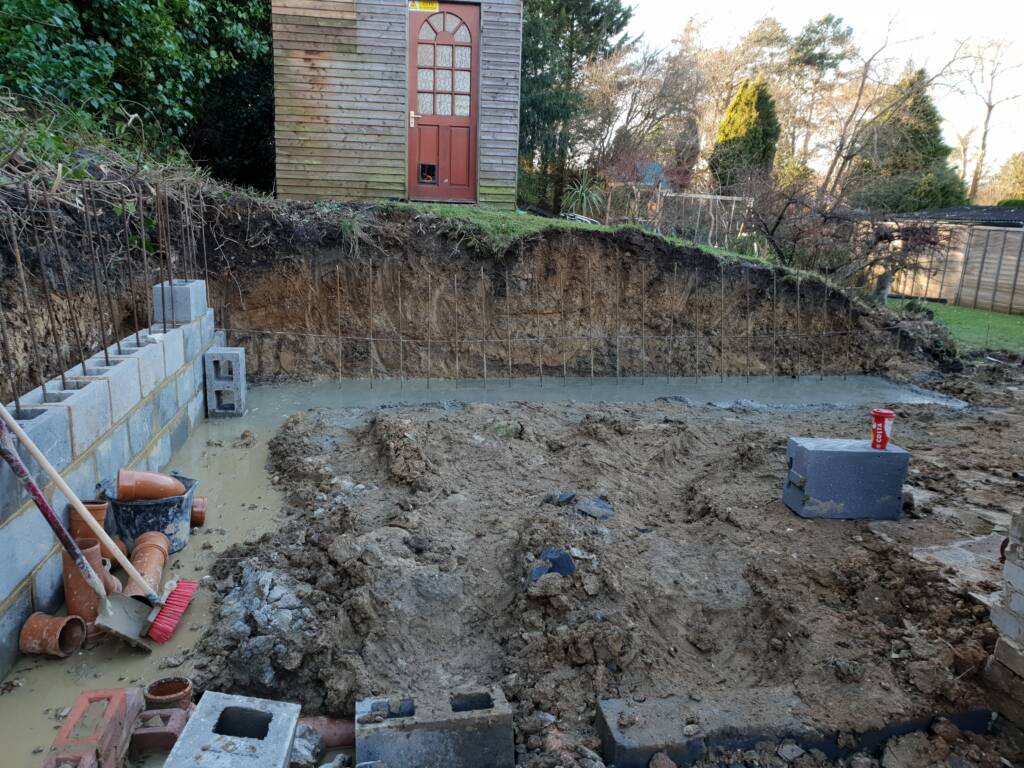
When you’re engaging in retaining wall construction during winter, additional factors come into play: soil freeze‑thaw cycles, added hydrostatic pressure from saturated soil, and potential movement. Your wall’s design must account for these forces, and your groundworks must be executed with precision.
Choosing the right wall type, reinforcement, and backfill is vital when building in the colder months.
How Drainage Behind Retaining Walls Prevents Failure
In retaining wall building, drainage is key:
- A weep hole at the base allows water to escape rather than build behind the wall.
- Perforated drainage pipes and free‑draining aggregate behind the wall reduce the risk of pressure from saturated soil.
- Properly compacted backfill that drains rather than retains water helps avoid freeze‑thaw stress.
If your groundworks contractor plans drainage as part of the retaining wall build, you’re far more likely to end up with a wall that lasts the test of time and cold weather.
Local Insights: Groundworks in Farnham, Guildford & Across Surrey
Ground Conditions and Regulations in the Area
In places such as Farnham, Guildford and across Surrey, soil types often include heavy clay or chalk, each with its own drainage and load‑bearing challenges. Wet winters are common, so you must ensure your groundwork takes into account local conditions, frost depth and regulatory factors (such as the UK Building Regulations relating to foundations and drainage).
Understanding local geology and seasonal behaviour, like our foundations Surrey company, ensures your foundations and footings are appropriately designed.
Why Use Local Experts for Groundworks in Farnham and Guildford
Engaging a local groundwork specialist means you’ll benefit from:
- Knowledge of local soil and frost conditions in Surrey.
- Familiarity with local authority regulations, planning conditions and building control for foundations and retaining walls.
- The ability to coordinate drainage, foundation, and wall build as a single integrated package – ensuring best practice rather than piecemeal work.
Choosing a contractor experienced in groundworks Farnham or groundworks Guildford gives you confidence that the job will be executed to regional standards, not generic national ones.
Strong Winter Foundations and Footings Start with the Right Groundwork
When you combine properly executed foundations, footings, drainage and retaining walls, you’re building a resilient structure, even in the coldest months. Winter doesn’t have to be a barrier to progress. With the right groundwork planning, you can set up your build for success before spring’s arrival.
If you’re looking for solid foundations in Surrey, a team that understands cold‑weather groundworks, or retaining walls built with drainage in mind, speak to our expert team today or call us on 01252 560386.
Frequently Asked Questions
Q1: Can you build foundations in winter in the UK?
Yes – you can build foundations in winter provided sub‑survey, excavation, concrete placement and curing are managed properly (and frost/icy ground is avoided). Cold‑weather guidelines emphasise keeping the concrete temperature above 5 °C until it develops sufficient strength.
Q2: What’s the difference between foundations and footings?
Footings are the lower part of your foundation system. They spread the load of the building into the soil. Foundations sit on the footings and provide the vertical support structure. Both must be designed to suit soil conditions, winter ground movement and building loads.
Q3: How is drainage connected to retaining walls and foundations?
Drainage helps by removing or redirecting water that could exert pressure on foundations or walls, freeze below the surface, or saturate soil and reduce its load‑bearing capacity. In retaining wall building, drainage behind the wall (weep holes, perforated pipes, free‑draining back‑fill) is essential to prevent failure.
Q4: Do I need special permissions for foundations in Guildford or Farnham?
While standard domestic foundations often fall under building regulations rather than separate permissions, local authority rules in Surrey may require ground investigations or specific drainage plans. Using a local groundwork contractor familiar with groundworks Guildford or groundworks Farnham helps ensure compliance.
Q5: Why choose local contractors for groundworks in Surrey?
Local contractors understand the region’s soil types, frost behaviour, rainfall patterns and local authority requirements. They’re more likely to provide integrated solutions for foundations, footings, drainage and retaining walls that are appropriate for your site and climate, rather than one‑size‑fits‑all.
