


Winter rain doesn’t have to mean flooding, soggy lawns, or waterlogged driveways. With the right planning and well-executed groundworks, you can protect your property long before the first storm rolls in. From installing a trench drain driveway or a full trench drainage system, to designing an efficient soakaway garden or soakaway driveway, the key is ensuring water has somewhere safe to go. Even thoughtful additions like retaining wall construction can redirect surface runoff and stabilise vulnerable areas.
In this guide, we’ll break down how proper preparation, whether through local groundworks and professional groundwork Surrey company Evolve Construction, can keep your home dry and secure all season long. Winter flooding is preventable; it just takes the right groundwork beneath your feet.
Why Winter Drainage Matters More Than You Think
The Impact of Heavy Rain and Freezing Temperatures
When winter brings heavy rainfall and frost, water becomes a major threat to your property’s exterior. If you have a driveway or garden area where water cannot escape easily, puddling and ice patches can form, leading to slippery surfaces and long‑term damage. The Government website states that surfaces like driveways over 5 m² must include a drainage system if they are impermeable.
Failing to manage winter run‑off properly can cause surface erosion, water ingress into foundations, and even pressure build‑up behind walls.
Why Local Groundworks Are Crucial for UK Properties
When it comes to effective drainage, regional factors matter a lot, and this is where local expertise in groundworks in Surrey (and the broader South West/UK region) really pays off. Soil types, terrain, rainfall patterns and frost successions all differ by locale. A one‑size‑fits‑all approach may fail. Employing a contractor experienced in local groundworks ensures your solutions (such as a trench drainage system, soakaway system or retaining wall building) are designed for your specific site.

Trench Drain Driveway: The First Line of Defence
What Is a Trench Drainage System and How Does It Work?
A trench drainage system (also called a linear or channel drain) is essentially a narrow, long drainage channel installed at a driveway edge or across its width. The system captures surface water runoff from impermeable surfaces (like concrete or block paved driveways) and directs it away safely.
In a winter scenario, the trench drain driveway is designed to intercept surface water before it freezes or causes pooling, thus helping maintain a safe driveway surface and preventing water damage.
Benefits of Installing a Trench Drain Driveway
- Directs water away from the driveway surface, reducing standing water and freezing risk.
- Helps protect adjacent laneways, foundations, or gardens by redirecting run‑off.
- Supports compliance with UK drainage regulations for driveways and hard surfaces.
- When combined with a properly constructed base and slope, it enhances the lifespan of the driveway and prevents structural issues.

Soakaway System: Discreet Yet Powerful Drainage
What Is a Soakaway System and When Should You Use One?
A soakaway system is a subsurface structure (often filled with rubble or plastic crates) that stores surface water and allows it to gradually infiltrate into the ground. For many non‑permeable driveways or hard‑scaped gardens, a soakaway becomes essential.
Before installing one, you’ll often need a percolation test (to check how quickly the soil absorbs water). If the water isn’t dispersing fast enough, the soakaway may fail.
Choosing Between a Soakaway Driveway or a Soakaway Garden Setup
- Soakaway Driveway: For driveways constructed with impermeable materials (e.g., concrete slabs, block paving) where water cannot simply seep through the surface. The soakaway is sized to accept run‑off from the whole driveway.
- Soakaway Garden: For landscaping areas or patios where water needs to be managed without affecting plants or adjacent structures.
Regulatory context: If your surfacing is impermeable and larger than 5 m², you must include either a permeable solution or manage runoff via soakaway/channel drains. If you don’t, you may face planning or building‑regulation hurdles.
A qualified groundworks contractor will design the soakaway capacity, location, and outflow, taking into account local soil and terrain – critical for groundwork Surrey and broader UK sites.

Retaining Walls and Drainage Go Hand‑in‑Hand
Retaining Wall Building for Sloped Gardens and Water Control
If you have sloped gardens, retaining walls aren’t just aesthetic; they play a vital drainage role too. Proper retaining wall construction involves managing both surface and groundwater to prevent excessive pressure from building up behind the wall.
During winter, saturated soil behind a wall can freeze and expand, pushing against the structure. That means the retaining wall building must integrate drainage from the start to relieve that pressure and enhance longevity.
Retaining Walls Construction with Drainage in Mind
Key drainage measures for reliable retaining walls:
- Include perforated drainage pipes at the base/back of the wall and behind the fill to channel water away.
- Use free‑draining backfill material (gravel/stone) behind the wall so water doesn’t build up.
- Install weep holes at the base of the wall to allow water to escape.
- Ensure groundworks consider the wider system: where does collected water go? How is surface water prevented from flowing behind the wall?
When done well, your retaining wall becomes both a stabilising landscape feature and part of your drainage infrastructure.
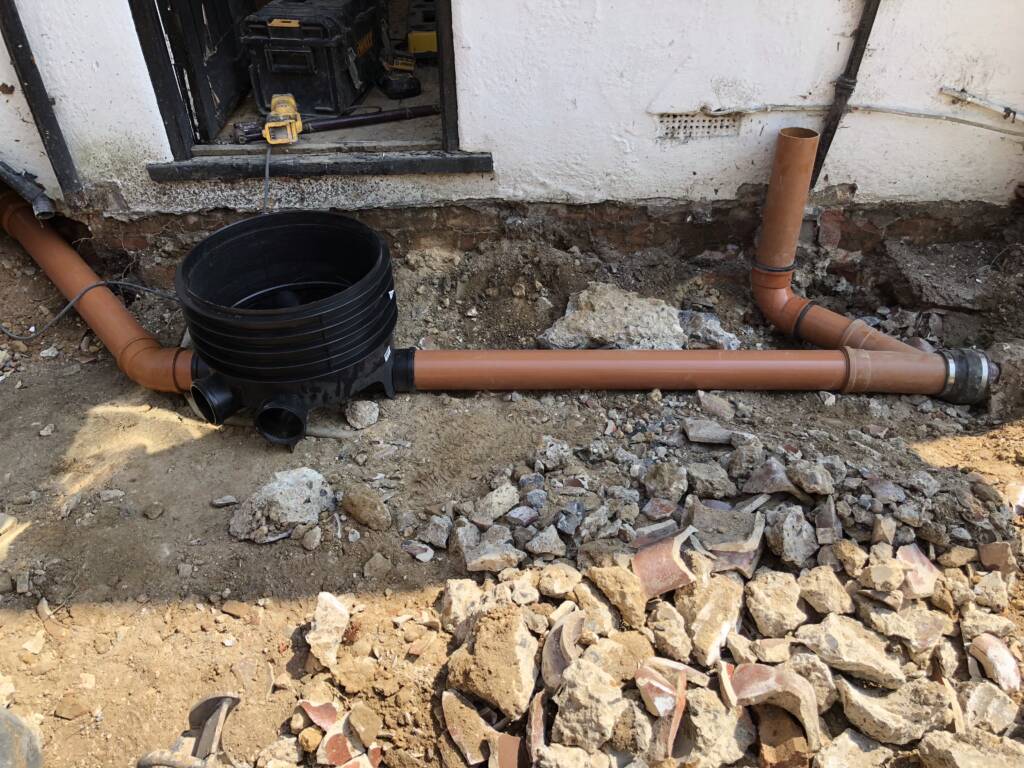
Key Groundwork Considerations in Surrey
Local Soil Types and Drainage Requirements
In regions like Surrey (and across the UK), soil may vary from clay to chalk, each with different percolation and drainage behaviours. Clay soils, for example, drain slowly – meaning your soakaway system must be sized accordingly, or you might require alternative solutions.
As part of local groundworks, your contractor should assess: existing run‑off patterns, slope, soil type, proximity to structures, and integration with your driveway, garden or retaining wall project.
Why Use Local Groundworks Experts Like Evolve Construction?
Choosing a region‑aware firm like Evolve Construction means:
- Knowledge of local regulatory and climate demands (winter rainfall, frost, soil issues).
- Experience in designing trench drain systems, soakaway installations and retaining wall building in the area.
- Ability to integrate drainage seamlessly with your hard‑scaping or driveway project, rather than viewing drainage as an afterthought.
Ensuring your groundwork is done right now saves you from future costlier repairs or remedial works.
Don’t Wait for Flooding to Fix Your Drainage
Winter can expose weaknesses in your drainage, hard‑scaping and groundwork, but it also offers a smart window for proactive work. Whether you’re installing a trench drain driveway, planning a soakaway system for your garden or driveway, or building retaining walls with drainage built in, acting early preserves value, prevents damage and reduces disruption.
If you’re in Surrey or the surrounding area and want dependable, well‑designed drainage integrated with your external works, get in touch with the Evolve Construction team today – your local groundworks specialist.
Frequently Asked Questions
Q1: What is a trench drain driveway and do I need one?
A trench drain driveway can refer to driveway installation that includes a linear drainage channel (trench drain) along its edge or transverse to catch surface water. You may need one when your driveway is made of impermeable surfacing (like concrete or block paving) and sits in a location where water would otherwise pool or run towards structures.
Q2: How does a soakaway system work in UK gardens and driveways?
A soakaway system stores surface water in a subsurface structure (crates or rubble) and allows it to gradually infiltrate into the surrounding soil. It’s especially useful when surfacing is impermeable and your site cannot simply drain naturally. A percolation test may be required to verify the soil’s capacity.
Q3: What’s the difference between a soakaway driveway and a soakaway garden?
The principle is the same (collecting and dispersing water underground), but a soakaway driveway is designed for heavier loadings (vehicles) and often larger volumes of run‑off. A soakaway garden may deal with patio or landscape drainage and might not require the same structural load considerations.
Q4: Can retaining walls help with drainage on sloped ground?
Absolutely. In fact, retaining walls construction must incorporate drainage to prevent water pressure from building behind the wall, which could lead to failure. Features such as weep holes, perforated pipes, drainage aggregate and cut‑off drains are all part of best practice.
Q5: Why is it important to use local groundworks experts in Surrey for drainage and retaining wall building?
Local groundworks experts know the soil types, climate challenges (winter rainfall, frost) and regulatory requirements in the region. They can design drainage, soakaway and wall systems tailored to your site rather than applying a generic solution, which improves performance and reduces future risks.
